Heat, Cold, and Miles: The Real Story of Hyundai EV and Hybrid Battery Longevity Across America
The question arrives eventually for nearly every Hyundai EV or hybrid owner: how long will the battery actually last, and what happens when it does not perform the way it once did? It is a reasonable concern, and the honest answer is more nuanced than either the optimistic projections in manufacturer literature or the alarming headlines that circulate online.
This article takes a candid look at what Hyundai's electrified battery systems actually do across America's varied climates, what degradation looks like in practice, what the warranty covers and does not cover, and how owners can make genuinely informed decisions about the long-term economics of their vehicle.
Why Climate Is the Variable That Changes Everything
Battery chemistry is temperature-sensitive in ways that have direct, measurable consequences for owners. Lithium-ion cells — the technology underlying both Hyundai's full EV lineup and its hybrid systems — perform within an optimal temperature band of roughly 60 to 80 degrees Fahrenheit. Operating consistently outside that range, whether through sustained heat or sustained cold, accelerates the electrochemical processes that reduce a cell's capacity to hold charge over time.
This is not a Hyundai-specific limitation. It is a physics reality that affects every electrified vehicle on the market. What distinguishes manufacturers is how well their thermal management systems mitigate it.
In hot climates — Phoenix, Las Vegas, Houston, Miami — ambient temperatures routinely push battery packs beyond their optimal range during charging and while the vehicle sits parked outdoors. Hyundai's Ioniq 5 and Ioniq 6 use an active liquid cooling system that manages pack temperature during operation, but the thermal load from prolonged outdoor exposure in extreme heat still contributes to accelerated long-term degradation. Owners in these markets typically observe slightly more pronounced capacity loss in years four through seven compared to owners in more temperate regions.
In cold climates — Minnesota, Wisconsin, Montana, upstate New York — the impact is different in character. Cold does not permanently damage battery cells the way sustained heat does, but it dramatically reduces the usable capacity in real time. An Ioniq 6 rated at 266 miles of range under EPA conditions may deliver 180 to 210 miles in sustained below-freezing temperatures. This is temporary — capacity largely returns as temperatures rise — but it shapes the daily experience of ownership in ways that owners in warmer states rarely encounter.
In temperate climates — the Pacific Northwest, much of the Mid-Atlantic, and parts of the Mountain West at moderate elevations — battery systems tend to perform closest to their rated specifications over time. Owners in these regions consistently report the most stable long-term range retention.
What Degradation Actually Looks Like
Battery degradation is not a cliff — it is a gradual slope. For Hyundai's current EV lineup, real-world data from early Ioniq 5 adopters suggests that most vehicles retain between 88 and 93 percent of their original capacity after 100,000 miles when operated under normal conditions. That is a meaningful but not catastrophic reduction; a vehicle originally rated at 266 miles of range would still deliver approximately 234 to 247 miles at that point.
For hybrid owners — those driving a Tucson Hybrid, Santa Fe Hybrid, or Elantra Hybrid — the battery degradation question is less acute in daily experience because the hybrid battery is smaller, operates within a narrower state-of-charge window, and is supplemented continuously by the combustion engine. Hybrid battery longevity has proven to be genuinely robust in real-world ownership, with many Toyota hybrid owners (the longest-tenured dataset available) reporting functional battery performance well beyond 200,000 miles. Hyundai's hybrid architecture has benefited from the industry's accumulated learning in this area.
What Hyundai's Warranty Actually Covers
Understanding the warranty structure is essential before drawing conclusions about long-term ownership economics.
For Hyundai's battery electric vehicles, the high-voltage battery is covered for 10 years or 100,000 miles, whichever comes first. Critically, this coverage includes a capacity retention clause: if the battery degrades below 70 percent of its original capacity within the warranty period, Hyundai is obligated to repair or replace it at no cost to the owner.
This 70 percent threshold is meaningful. It means that even significant degradation — a 25 to 30 percent capacity loss — falls within the warranty's acceptable range without triggering a replacement obligation. Owners who expect warranty coverage to maintain near-original performance may find this threshold disappointing. Those who understand it as a floor against catastrophic failure will find it more reassuring.
For hybrid models, the high-voltage battery carries a 10-year/100,000-mile warranty as well, consistent with federal regulations for hybrid system components. The practical claim rate on these batteries has been low relative to the total hybrid fleet, which reflects both the robustness of the technology and the narrower operating demands placed on hybrid battery packs.
Practical Strategies for Extending Battery Life
Owners are not passive participants in battery longevity. Several habits have documented impact on long-term capacity retention:
Avoid routine charging to 100 percent. Most battery management experts recommend maintaining a daily charge ceiling of 80 percent for EVs used in regular commuting, reserving full charges for days when maximum range is genuinely needed. Hyundai's BlueLink app allows owners to set charge limits remotely.
Precondition the battery before cold-weather driving. Using the vehicle's climate preconditioning feature while still plugged in warms the battery to its optimal operating temperature without drawing on stored charge. This reduces the immediate capacity penalty of cold-weather operation and reduces the thermal stress associated with rapid energy draw from a cold pack.
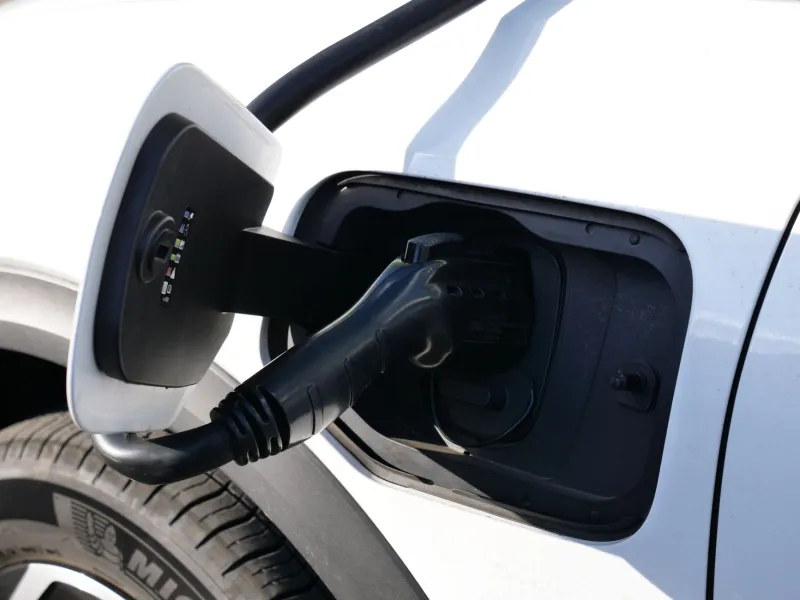
Minimize prolonged DC fast charging when possible. Level 2 AC charging is gentler on battery chemistry than repeated DC fast charging sessions. For owners who primarily commute and can charge overnight at home, DC fast charging should be an occasional convenience rather than a daily routine.
Park in shade or covered parking in hot climates. This is a simple behavioral adjustment with a real impact on the ambient temperature load the battery management system must counteract.
When Battery Replacement Becomes an Economic Decision
For owners outside the warranty window — or those whose degradation falls above the 70 percent threshold — the question eventually becomes financial rather than technical.
Hyundai replacement battery costs for the Ioniq 5 and Ioniq 6 have ranged from approximately $12,000 to $20,000 depending on the pack size and labor involved, though these figures are expected to decline as battery production scales and recycled-pack programs mature. At current pricing, a replacement battery on a vehicle with 120,000 miles and otherwise sound mechanical condition is likely economically viable if the vehicle's remaining useful life and market value support the investment.
For owners whose vehicles are approaching high mileage and whose battery degradation is significant but not warranty-triggering, the more honest calculation often points toward trading into a newer model — particularly given the pace of improvement in Hyundai's EV lineup and the federal tax credit landscape that continues to evolve under current US energy policy.
The Informed Owner's Advantage
Battery anxiety is real, but it is most often rooted in uncertainty rather than actual failure. Hyundai's electrified ownership experience across America's diverse climates is, on balance, a story of durable technology managed well — provided owners understand what their vehicle is doing, what the warranty covers, and what habits support long-term performance. That understanding is the most reliable tool any Hyundai EV or hybrid owner has.