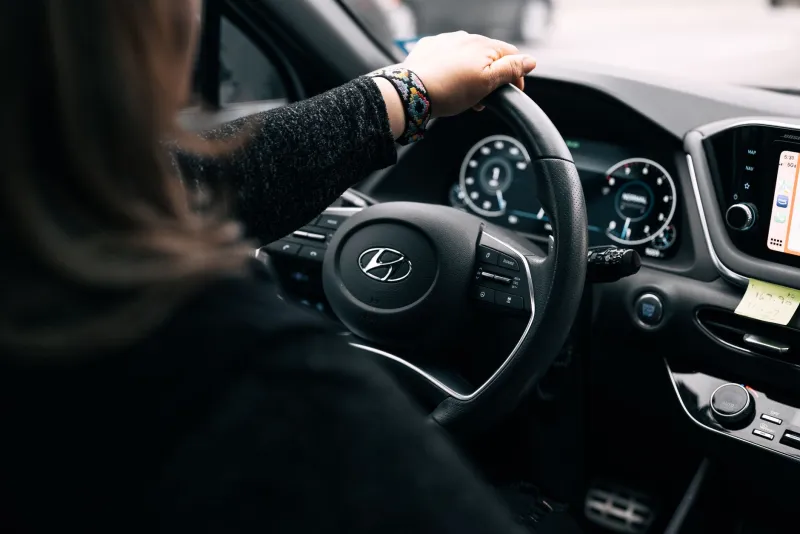
Screens That Actually Deliver: How Hyundai's Infotainment Evolution Is Winning Over American Drivers
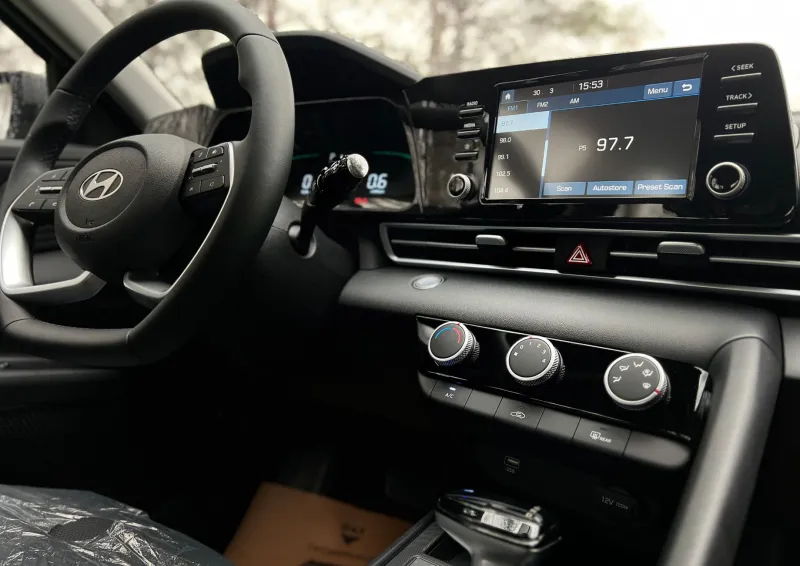
For most American drivers, the dashboard screen is no longer a novelty — it is a utility. It routes them through traffic, streams their playlists, handles their calls, and increasingly, manages vehicle functions they once handled manually. Hyundai understood this shift early, and over the past several model years, the brand has invested heavily in building infotainment ecosystems that go well beyond the basics. The results are showing up in owner satisfaction surveys, and they are worth paying close attention to.
From Basic Touchscreens to Fully Connected Cockpits
If you purchased a Hyundai between 2018 and 2020, your infotainment experience was functional but limited. Bluetooth connectivity and basic navigation were standard on most trims, but the interface often felt slow, and software updates were infrequent. Fast-forward to the 2023 and 2024 model years, and the difference is remarkable.
Hyundai's current lineup — spanning the Tucson, Santa Fe, Sonata, Elantra, and the IONIQ electric family — ships with the brand's latest ccNC (Connected Car Navigation Cockpit) platform. This architecture allows for over-the-air (OTA) software updates, meaning the system can improve itself without a dealer visit. For owners who remember watching their older system grow stale, this alone represents a fundamental shift in the ownership experience.
The screens themselves have grown as well. Many current trims feature displays ranging from 10.25 to 12.3 inches, with higher-resolution graphics and faster processing that eliminate the lag that plagued earlier generations.
Smartphone Integration: Where Daily Use Actually Lives
In real-world driving, most owners interact with their infotainment system through Apple CarPlay or Android Auto rather than native apps. Hyundai recognized this behavior and moved to support wireless versions of both platforms across a wide range of current models — a step many competitors were slower to take.
Wireless CarPlay and Android Auto eliminate the cable clutter that frustrated owners for years. You drop your phone in the center console, and within seconds your contacts, maps, music, and messaging apps are mirrored on the screen. For commuters in cities like Chicago, Denver, or Atlanta, where navigation is a daily necessity, this seamless handoff between phone and vehicle has become one of the most appreciated quality-of-life improvements in recent Hyundai ownership.
Hyundai's own Bluelink connected services layer sits alongside these integrations, offering remote start, vehicle health reports, and geofencing alerts through a dedicated smartphone app. For families managing a shared vehicle or parents monitoring new drivers, Bluelink adds a dimension of oversight that third-party systems simply cannot replicate.
Voice Controls: Closing the Gap on Competitors
Voice recognition has historically been a weak point for many automakers, and Hyundai was no exception. Early systems required precise phrasing and struggled with accents common across different American regions. The current generation is considerably more conversational.
Hyundai's latest voice assistant, available on select 2023 and 2024 models, processes natural language commands with improved accuracy. Asking it to "find a gas station near the highway" or "set the temperature to 70" now works reliably in most scenarios. While it has not yet reached the responsiveness of Amazon Alexa or Google Assistant in a home device, the gap has narrowed meaningfully.
On higher trims of the IONIQ 6 and IONIQ 5, Hyundai has integrated an AI-based assistant that learns driver preferences over time — adjusting seat position, climate settings, and even suggesting departure times based on calendar data. These features, once exclusive to luxury brands, are arriving in Hyundai's mainstream lineup at competitive price points.
How Hyundai Stacks Up Against the Competition
Fairness demands a comparison. Toyota's infotainment systems, while reliable, have long been criticized for dated interfaces and slower adoption of wireless smartphone integration. Honda's latest systems are competitive but have faced criticism for unintuitive menu structures. Ford's SYNC 4 platform and GM's Ultifi architecture are capable, but both require significant trim-level investment to unlock their best features.
Hyundai's advantage lies in offering a strong infotainment experience at mid-range trim levels rather than gating it behind top-tier packages. A well-equipped Hyundai Tucson SEL, for instance, delivers wireless CarPlay, a digital instrument cluster, and OTA update capability at a price point that undercuts comparably equipped competitors.
J.D. Power's most recent U.S. Tech Experience Index has reflected this progress, with Hyundai models scoring above the industry average in infotainment usability — a category where the brand once struggled.
Should You Upgrade Your Vehicle for Better Technology?
This is the question many current Hyundai owners are quietly wrestling with. If you are driving a 2019 or 2020 model, your vehicle is mechanically sound and may have years of reliable service ahead of it. But the technology gap between that era and today's systems is substantial.
The financial calculus matters here. Upgrading to a 2024 model purely for infotainment improvements is difficult to justify on cost alone — you would be trading a paid-off or nearly paid-off vehicle for a new monthly payment. However, if you are already approaching a natural trade-in window, factoring in the technology improvements as part of your decision is entirely reasonable.
For owners who want an interim solution, aftermarket head units exist, but they rarely integrate cleanly with Hyundai's existing driver assistance systems or Bluelink connectivity. The native experience is simply better.
The smarter move for most owners is to evaluate the full picture: remaining warranty coverage, current mileage, and how much of your daily satisfaction is tied to the in-cabin technology experience. If the screen frustrates you every morning, that frustration has a real cost in quality of life — even if it does not show up on a balance sheet.
The Takeaway for Hyundai Owners
Hyundai's infotainment journey from adequate to genuinely impressive has been steady and deliberate. The brand has prioritized features that matter in everyday American driving conditions — reliable smartphone mirroring, responsive voice controls, and a connected services layer that adds genuine utility. For owners of current-generation models, the experience is one of the strongest arguments for brand loyalty. For those still driving earlier systems, the gap is real, and it is worth understanding before your next purchase decision.
At Hyundai Ngo Can 5S, we encourage every owner to experience the current generation firsthand. A test drive at your nearest dealership will tell you more about the technology's value than any specification sheet ever could.