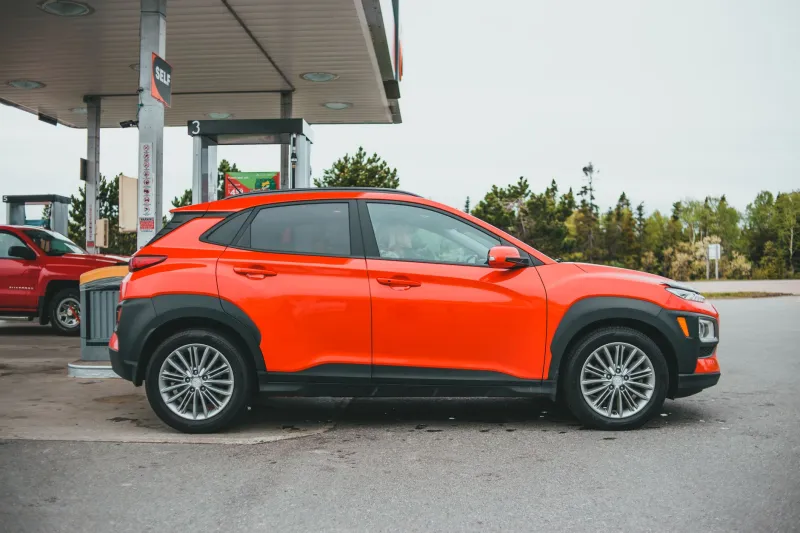
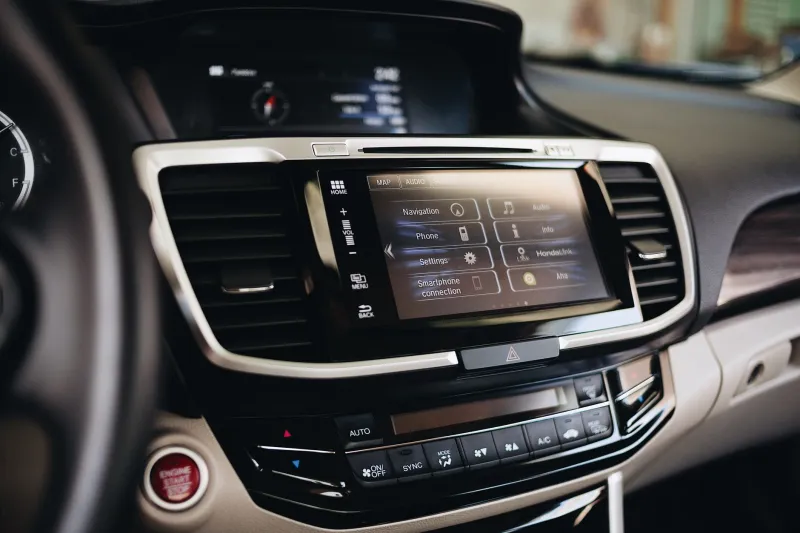
Holding Their Value: Why Hyundai Models Are Becoming a Smart Bet in the Used-Car Market
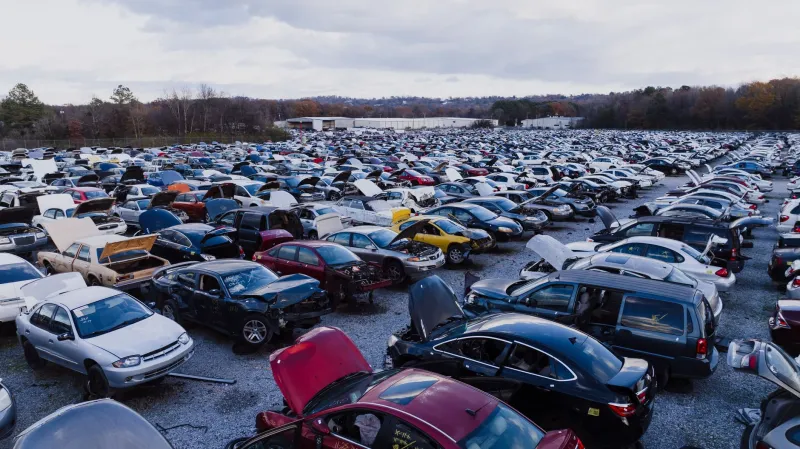
For years, the conventional wisdom among American car buyers was straightforward: if resale value mattered, you bought Japanese. Toyota and Honda dominated conversations about depreciation resistance, and brands like Hyundai were often dismissed as budget alternatives with uncertain long-term prospects. That narrative, however, has shifted considerably — and the numbers are beginning to reflect it.
Today, Hyundai occupies a meaningfully stronger position in the secondary market than at any point in its American history. For current owners, this is welcome financial news. For prospective buyers weighing their options, it adds a compelling dimension to an already competitive value proposition.
At Hyundai Ngo Can 5S, we have observed this shift firsthand through the conversations we have with buyers and sellers across our community. What follows is an honest look at the factors driving Hyundai's improved standing in the used-car market — and what it means for owners today.
The Depreciation Picture: What the Data Actually Shows
Depreciation remains the single largest cost of vehicle ownership for most Americans, yet it receives far less attention than monthly payments or fuel economy. A vehicle that retains a higher percentage of its original value after three to five years effectively costs its owner less, even if the sticker price was identical to a competing model.
According to data published by iSeeCars and Kelley Blue Book, several Hyundai models have demonstrated depreciation rates that now rival — and in some segments, outperform — comparable offerings from more established brands. The Hyundai Tucson, for instance, has shown three-year depreciation figures that place it favorably against the Honda CR-V and Toyota RAV4 in recent model years. The IONIQ 5, despite entering a volatile EV market, has held its value with notable consistency relative to other electric vehicles in its class.
The Palisade, Hyundai's full-size three-row SUV, has been particularly noteworthy. Strong consumer demand and limited inventory during recent model years contributed to elevated used-car prices that surprised even seasoned automotive analysts.
Reliability Perception: A Decade in the Making
Resale value does not exist in a vacuum. It is, in large part, a reflection of consumer confidence — and consumer confidence is built through years of accumulated ownership experience.
Hyundai's decade-long investment in quality improvement has produced measurable results. J.D. Power's Vehicle Dependability Study has ranked Hyundai competitively for several consecutive years, a development that has not gone unnoticed by used-car buyers. When a prospective purchaser searches for a three-year-old Tucson or Santa Fe, they are increasingly finding owner reviews that reflect genuine satisfaction rather than the reliability concerns that plagued the brand in earlier generations.
Denise M., a registered nurse from the suburbs of Atlanta, Georgia, described her experience selling a 2019 Hyundai Santa Fe last spring: "I was honestly surprised by the offers I received. A family member told me I'd take a beating on the trade-in, but the dealer quoted me significantly more than I expected. I ended up putting that money toward a new Palisade."
Her experience is consistent with a broader pattern. As Hyundai's reliability reputation has solidified, used-car buyers have grown more willing to pay a premium for the brand's vehicles — which, in turn, supports stronger residual values for current owners.
The Warranty Factor: A Competitive Differentiator That Carries Forward
One of Hyundai's most enduring advantages in the used-car market is the transferability of its powertrain warranty. Hyundai's standard powertrain coverage — 10 years or 100,000 miles for the original owner — is among the most generous in the industry. While the coverage terms shift for subsequent owners (to 5 years or 60,000 miles), this still represents a meaningful assurance that many competing brands do not offer.
For a buyer considering a four-year-old Hyundai with 45,000 miles on the odometer, the knowledge that significant powertrain coverage remains in place is a genuine purchase incentive. This warranty confidence reduces the perceived risk of buying used, which supports demand — and demand, of course, supports price.
This dynamic is particularly relevant in markets like the American Midwest and Southeast, where buyers tend to hold vehicles for longer periods and place considerable weight on long-term mechanical assurance.
The EV Premium: IONIQ Models in the Secondary Market
The emergence of Hyundai's IONIQ lineup has introduced an additional layer of complexity — and opportunity — to the brand's resale story. Electric vehicles across all manufacturers have experienced unusual depreciation volatility in recent years, driven by rapid technology advancement, federal tax credit changes, and fluctuating consumer sentiment.
Within this turbulent environment, the IONIQ 5 and IONIQ 6 have fared comparatively well. Industry analysts attribute this in part to Hyundai's 800-volt charging architecture, which supports ultra-fast charging speeds that remain genuinely rare in the broader EV market. Vehicles with tangible technological advantages tend to retain buyer interest longer — and that interest is reflected in used-car pricing.
Furthermore, the federal used-clean-vehicle tax credit introduced under the Inflation Reduction Act — which provides up to $4,000 for qualifying pre-owned EVs — has directed additional buyer attention toward used IONIQ models, creating demand that benefits sellers.
What This Means for Current Owners
For the Hyundai owner reading this article from somewhere in the United States — whether you purchased a Elantra for a college commute or a Palisade for a growing family — the trajectory described above carries real financial implications.
The vehicle sitting in your driveway is likely worth more, relative to its original purchase price, than comparable vehicles from brands that once dominated resale conversations. That equity position matters when it comes time to trade in, sell privately, or leverage a vehicle's value toward a future purchase.
It also matters in a subtler way: it validates the purchase decision. Choosing Hyundai was not merely a choice about initial affordability — it was, increasingly, a sound long-term financial decision.
A Brand Still Earning Its Reputation
It would be an overstatement to suggest that Hyundai has fully closed the gap with Toyota or Honda in every resale metric. In certain segments, those brands continue to command a premium that reflects decades of established trust. However, the direction of travel is clear, and the pace of improvement is genuine.
For buyers entering the used-car market today, Hyundai represents a compelling combination of modern technology, transferable warranty protection, and improving residual strength. For current owners, it is an affirmation that their vehicle continues to deliver value long after the purchase paperwork was signed.
At Hyundai Ngo Can 5S, we remain committed to helping our community understand not just the vehicles themselves, but the full financial picture of Hyundai ownership — from the first test drive to the final trade-in.