Upgrade Without the Uncertainty: A Current Hyundai Owner's Roadmap to Their Next Purchase

There's a particular kind of confidence that comes with already knowing a brand. You've logged the miles, navigated the service appointments, and developed an informed opinion about what works and what you'd want done differently next time. As a current Hyundai owner, you arrive at your next purchase with something most first-time buyers lack: experience.
At Hyundai Ngo Can 5S, we work with returning customers regularly, and the questions they bring are consistently more sophisticated than those of first-time shoppers. They want to know how to extract maximum trade-in value, which loyalty programs actually benefit them, whether the technology gap between their current model and the latest generation justifies the upgrade, and how to structure the financial transition intelligently.
This guide addresses all of those questions directly.
Timing Your Trade-In: When the Numbers Favor You
Trade-in value is not static — it fluctuates with market conditions, your vehicle's mileage, and seasonal demand patterns. Generally speaking, Hyundai models retain value most favorably in the 36,000–60,000 mile range. Beyond 75,000 miles, depreciation accelerates in ways that are difficult to reverse regardless of vehicle condition.
If your current Hyundai falls in the 50,000–70,000 mile window and you've been considering an upgrade, the present moment may represent a strategically sound exit point. Used vehicle inventory across the US remains tighter than pre-pandemic norms in many segments, which has kept trade-in valuations relatively elevated compared to historical averages.
Before visiting any dealership, obtain independent trade-in estimates from at least two sources — Kelley Blue Book's Instant Cash Offer tool and CarMax's online appraisal are both widely used benchmarks. Arriving with documented third-party valuations positions you as an informed negotiator rather than a passive participant.
Maximizing What Your Current Hyundai Is Worth
Conditioning matters. Dealerships assess trade-in vehicles quickly, and first impressions carry weight. The following steps, each of modest cost, can meaningfully influence the appraisal outcome:
- Professional detailing: A thorough interior and exterior detail — typically $150–$250 — can add several hundred dollars to an appraisal by eliminating the visual cues that signal deferred maintenance.
- Service records in hand: Documented maintenance history demonstrates responsible ownership. If your vehicle has been serviced at Hyundai Ngo Can 5S or any authorized Hyundai dealership, request a printed service summary to present during appraisal.
- Address minor cosmetic issues: Small dents, cracked trim pieces, and burned-out exterior lights are inexpensive to correct but disproportionately affect appraisal perception.
- Tires: If your tires are borderline, replacing them before trade-in is worth evaluating. Appraisers note worn tires as a negotiating point.
Understanding Hyundai Loyalty Incentives
Hyundai Motor America maintains a structured loyalty incentive program for returning customers, and it represents genuine financial value that many owners either overlook or underestimate. Loyalty bonuses — typically ranging from $500 to $1,500 depending on the model and promotional period — are applied at the point of purchase and can be stacked with existing manufacturer incentives in many cases.
These offers change monthly, so the specific terms available to you will depend on when you initiate your purchase. Your sales advisor at Hyundai Ngo Can 5S can pull the current loyalty offer applicable to your situation. The key is to ask explicitly — loyalty incentives are not always surfaced proactively during the early stages of a sales conversation.
Additionally, if you financed your original Hyundai through Hyundai Motor Finance, you may qualify for preferred rate offers on your next vehicle. Returning finance customers with strong payment histories are frequently eligible for rate reductions that translate to meaningful savings over a 48- or 60-month loan term.
Evaluating the Technology Gap: Is the Upgrade Worth It?
This is where the safety and technology lens becomes particularly relevant. If your current Hyundai is a 2018–2020 model year, the generational leap in driver assistance and connectivity features available in the 2023–2025 lineup is substantial — and in several areas, it's not merely a matter of convenience.
Current Hyundai models equipped with Highway Driving Assist 2 (HDA 2) offer lane-centering and adaptive cruise control capabilities that represent a meaningful reduction in driver fatigue on long interstate routes — a practical safety benefit for families driving cross-country or commuters logging significant highway miles.
Blind-Spot Collision-Avoidance Assist (BCA), now standard on a broader range of trims than in earlier model years, actively intervenes rather than simply alerting — a distinction with real-world safety implications.
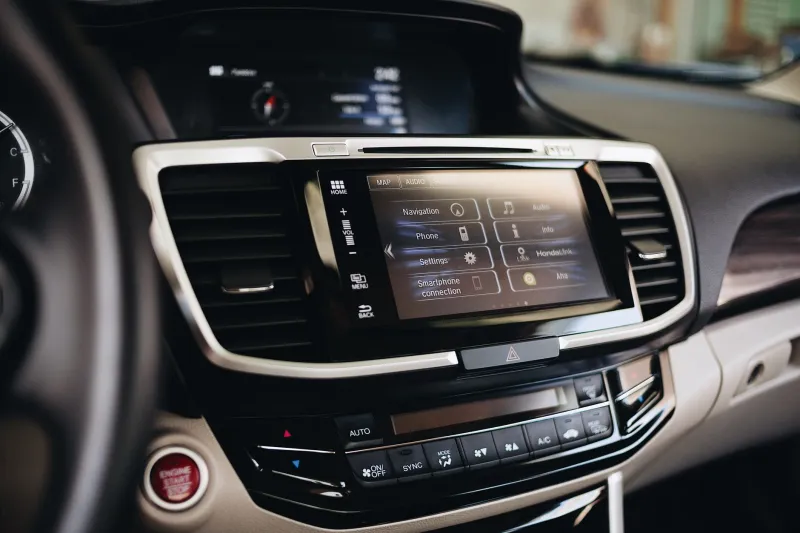
On the connectivity side, the transition from older head units to the latest 12.3-inch integrated cluster and infotainment displays — with native wireless Apple CarPlay and Android Auto — removes the friction points that owners of 2018–2020 models frequently cite as their primary source of dissatisfaction.
For owners whose current vehicles lack these features, the upgrade calculus extends beyond aesthetics. It's a question of what safety infrastructure you want surrounding your family on American roads.
Making the Financial Case for Staying Within the Hyundai Family
Brand loyalty, when exercised thoughtfully, carries financial logic. Beyond the loyalty incentives already discussed, staying within the Hyundai ecosystem means your service team already knows your ownership patterns, your maintenance preferences, and your history. That institutional knowledge has value.
Hyundai's warranty structure — among the most comprehensive in the non-luxury segment — also transfers meaningfully when you upgrade to a new model. You're not starting over with an unknown quantity; you're extending a relationship with a brand whose warranty commitments are well-documented.
For owners weighing a move to a competitor's vehicle, the comparison should account for total cost of ownership, not just MSRP. Hyundai's lower average repair costs, strong warranty coverage, and competitive fuel efficiency across its lineup frequently produce a more favorable five-year cost picture than comparable models from brands with higher brand-name premiums.
The Transition as a Relationship, Not a Transaction
At Hyundai Ngo Can 5S, our perspective on the trade-in and upgrade process is straightforward: the customers who navigate it best are those who treat it as a deliberate decision rather than an impulsive one. Take stock of what your current vehicle has delivered. Identify where it has fallen short of your evolving needs. Approach the next purchase with the same care you'd apply to any significant household financial decision.
The Hyundai lineup in 2024 and 2025 offers more genuine choice — in powertrain, body style, and technology tier — than at any previous point in the brand's US history. As a returning owner, you're positioned to navigate that choice with clarity.
That's an advantage worth using.