Built to Protect: How Hyundai's Safety Engineering Is Earning Top NHTSA Scores Across Its 2024 Lineup
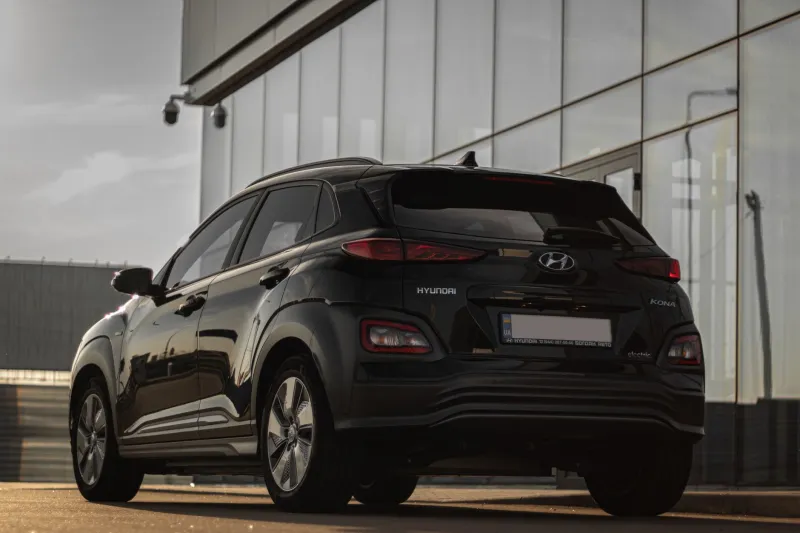
For American families navigating busy interstates, school pickup lines, and weekend road trips, vehicle safety is rarely a secondary concern. It is, for many buyers, the deciding factor. In recent years, Hyundai has made a compelling case that responsible engineering and accessible pricing do not have to be mutually exclusive — and the 2024 NHTSA ratings are offering hard data to support that claim.
At Hyundai Ngo Can 5S, we believe that an informed buyer is a confident buyer. That is why we have taken a close look at how Hyundai's current lineup performs under federal safety scrutiny, and what specific technologies are contributing to those results.
Understanding the NHTSA Rating System
The National Highway Traffic Safety Administration (NHTSA) conducts standardized crash tests on new vehicles sold in the United States and assigns ratings on a scale of one to five stars. These tests evaluate frontal crash protection, side crash protection, and rollover resistance. A five-star overall rating represents the highest level of occupant protection achievable under this framework.
While many automakers pursue these ratings, consistently earning five stars across multiple vehicle categories requires a sustained engineering commitment — not a one-time achievement. Hyundai's performance across its 2024 lineup reflects precisely that kind of institutional dedication.
The 2024 Hyundai Tucson: A Benchmark for Midsize SUV Safety
The Tucson has long been a cornerstone of Hyundai's American sales strategy, appealing to young professionals and growing families alike. For 2024, the Tucson earned a five-star overall NHTSA rating, with particularly strong scores in side-impact testing — a category that often proves challenging for compact and midsize SUVs.
What sets the Tucson apart is not merely its structural reinforcement, but the integrated approach Hyundai takes to passive and active safety together. The vehicle's high-strength steel frame works in concert with a comprehensive suite of driver-assistance features to reduce the likelihood of a collision occurring in the first place.
Hyundai SmartSense: The Technology Layer That Changes Everything
Perhaps no single element of Hyundai's safety strategy has had a greater impact on its NHTSA and IIHS performance than SmartSense — the brand's proprietary package of advanced driver-assistance systems (ADAS). Available as standard equipment on most trim levels across the 2024 lineup, SmartSense includes:
- Forward Collision-Avoidance Assist (FCA): Uses radar and camera technology to detect vehicles, pedestrians, and cyclists ahead, applying automatic emergency braking when a collision is imminent.
- Lane Keeping Assist (LKA): Monitors lane markings and applies corrective steering input if the vehicle begins to drift without a turn signal.
- Blind-Spot Collision Warning (BCW): Alerts drivers to vehicles in adjacent lanes that may not be visible in standard mirrors.
- Rear Cross-Traffic Collision Warning: Detects approaching vehicles when reversing out of parking spaces — particularly valuable in crowded urban environments.
- Driver Attention Warning: Monitors driving patterns for signs of fatigue or inattention, prompting the driver to take a break when necessary.
The decision to make SmartSense standard — rather than bundling it into premium trim packages — reflects a philosophy that safety should not be a luxury add-on. This approach has drawn considerable praise from consumer advocacy groups and automotive journalists alike.
The Santa Fe and Palisade: Protecting Larger Families
For buyers who need more space, the 2024 Santa Fe and Palisade represent Hyundai's answer to the three-row SUV segment. Both vehicles received strong NHTSA evaluations, with the Palisade in particular earning recognition for its robust side-curtain airbag system, which provides coverage across all three rows.
The Santa Fe adds a Highway Driving Assist system — a Level 2 semi-autonomous feature that combines adaptive cruise control with lane-centering technology. On long highway stretches between cities like Dallas and Houston, or along the I-95 corridor on the East Coast, this feature meaningfully reduces driver fatigue, which remains one of the leading contributors to serious accidents.
Ioniq 6: Electric Performance Meets Five-Star Protection
Hyundai's award-winning Ioniq 6 electric sedan has demonstrated that the transition to electrification does not require any compromise on safety. The vehicle's low center of gravity — a natural byproduct of its floor-mounted battery pack — contributes to exceptional rollover resistance, one of the more difficult categories for taller vehicles to navigate.
The Ioniq 6 also features an advanced multi-collision braking system that automatically applies the brakes after an initial impact, helping to prevent secondary collisions — a scenario that accounts for a significant proportion of serious injury outcomes in traffic accidents.
Structural Engineering: The Foundation Beneath the Technology
Driver-assistance technology is only as effective as the structure surrounding it. Hyundai's commitment to using advanced high-strength steel (AHSS) in critical load-bearing areas of its vehicles ensures that the physical architecture of each model can absorb and redirect crash energy away from the passenger compartment.
This structural philosophy, combined with precisely calibrated airbag deployment systems, means that even in scenarios where avoidance is not possible, occupant protection remains a priority. Engineers at Hyundai's global R&D centers conduct thousands of simulated and physical crash tests annually to refine these systems before a vehicle ever reaches a showroom floor.
Why This Matters for American Buyers
In the United States, motor vehicle crashes remain one of the leading causes of injury-related death, according to the Centers for Disease Control and Prevention. For families making a vehicle purchase decision, NHTSA ratings provide a reliable, government-backed benchmark that cuts through marketing language.
Hyundai's consistent performance in this area means that buyers at every price point — from the affordable Elantra to the premium Genesis-adjacent trims of the Palisade — can access vehicles that have been independently verified to offer superior crash protection.
Conclusion: Safety as a Brand Standard, Not a Selling Point
What distinguishes Hyundai's approach to safety in 2024 is the degree to which it has been institutionalized across the entire lineup rather than reserved for flagship models. Whether you are considering your first vehicle purchase or upgrading a family hauler, the evidence from NHTSA testing supports a straightforward conclusion: Hyundai builds vehicles designed to protect the people inside them.
At Hyundai Ngo Can 5S, our team is available to walk you through the specific safety features of any model in our inventory and help you identify the configuration that best fits your family's needs. We believe that every driver deserves access to vehicles engineered with their well-being as a foundational priority — and in 2024, Hyundai continues to deliver on that commitment.