Driving Further for Less: A Hyundai Owner's Playbook for Real-World Fuel Economy Gains
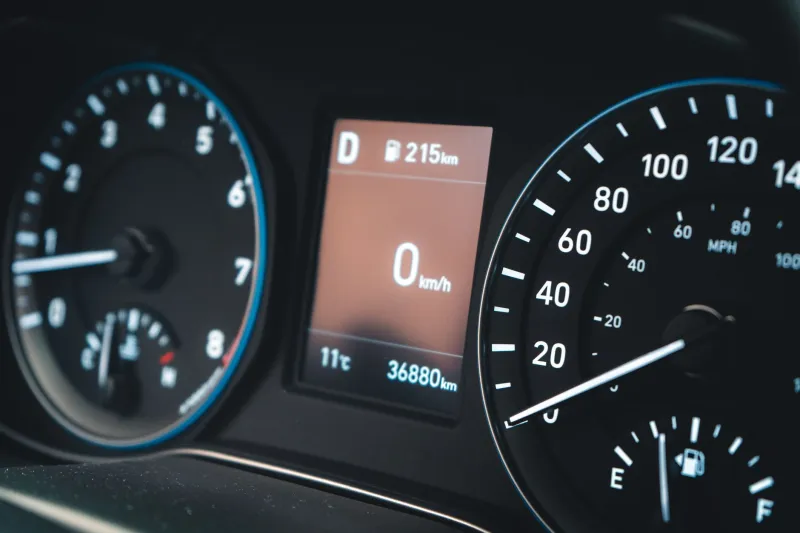
The window sticker tells part of the story. The EPA rating on your Hyundai Elantra, Tucson, or Sonata reflects a controlled testing environment—one that doesn't account for your particular commute, your local climate, or the way traffic moves on a Tuesday morning in Atlanta or Denver. For most American drivers, real-world fuel economy lands somewhere between 5 and 15 percent below the published estimate. The good news: with deliberate effort, that gap is entirely closable—and in some cases, reversible.
This guide is for Hyundai owners who want more than general advice. It offers specific, actionable steps grounded in how your vehicle actually works, along with rough dollar-figure projections to help you understand what each change is genuinely worth.
Why Your Actual MPG Differs from the Sticker
Before improving fuel economy, it helps to understand why the number drifts. EPA testing uses a standardized laboratory cycle that cannot replicate stop-and-go urban traffic, highway speeds above 65 mph, air conditioning load in a Southern summer, cold engine starts in Minnesota winters, or the weight of a full trunk. Each of these variables draws additional fuel. Collectively, they explain why a 2024 Hyundai Tucson rated at 26 city / 33 highway often returns closer to 24–28 mpg in mixed American driving.
Knowing this, the goal is not to argue with the EPA number—it is to systematically eliminate the factors that drag your real-world figure downward.
The Maintenance Foundation You Cannot Skip
Fuel efficiency is, at its core, a mechanical problem. An engine running with worn spark plugs, dirty air filters, or degraded oil has to work harder to produce the same power output. That extra work costs fuel.
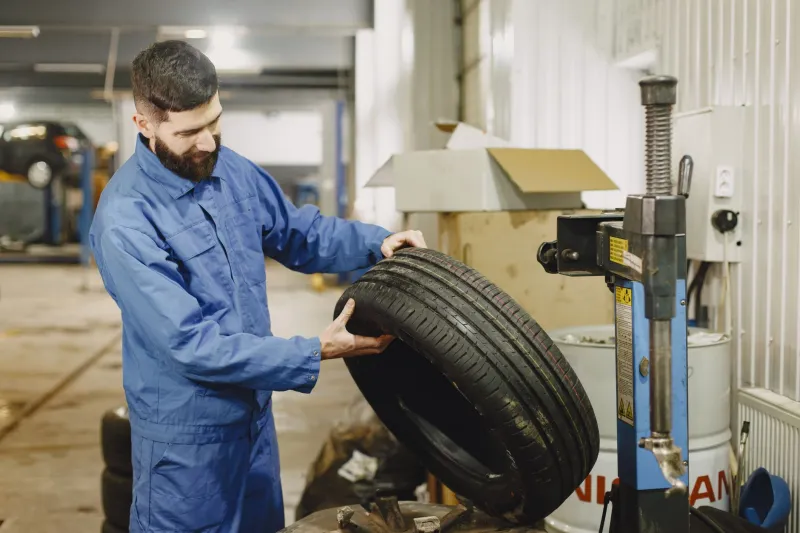
Tire Pressure: This is the single most impactful and most neglected maintenance item. Every 1 PSI drop in tire pressure costs roughly 0.2 percent in fuel economy, according to the U.S. Department of Energy. For a Hyundai Santa Fe driven 15,000 miles annually at current national average gas prices near $3.50 per gallon, running tires just 5 PSI low translates to approximately $25–$35 in unnecessary fuel spending per year. Most 2019-and-newer Hyundai models include a Tire Pressure Monitoring System (TPMS) that alerts you when pressure falls significantly, but the system is designed as a safety warning—not a precision fuel management tool. Check pressure monthly with a quality gauge, using the recommended PSI listed on your driver's door jamb, not the maximum figure stamped on the tire sidewall.
Engine Oil Grade: Hyundai engineers specify particular oil viscosities for each engine for a reason. Using a thicker oil than recommended increases internal friction. If your 2022 Hyundai Elantra calls for 0W-20 synthetic, using 5W-30 conventional oil can reduce fuel economy by 1–2 percent—a small but real cost over time.
Air Filter Condition: A clogged engine air filter restricts airflow, forcing the fuel management system to compensate. Replacing a dirty filter can restore up to 10 percent of lost fuel economy on older vehicles with carbureted engines; on modern fuel-injected Hyundai models, the gain is more modest but still measurable—typically 1–4 percent, depending on how restricted the filter has become.
Spark Plugs: Misfiring or worn plugs cause incomplete combustion, wasting fuel directly. Hyundai's recommended replacement intervals vary by model (consult your owner's manual), but neglecting this service can degrade efficiency by as much as 4 percent.
Driving Technique: The Behavioral Dividend
Mechanical condition sets the ceiling. How you drive determines where you land beneath it.
Smooth Acceleration and Early Braking: Aggressive acceleration from stops is the single largest behavioral drain on fuel economy. Research from the Oak Ridge National Laboratory consistently shows that smooth, gradual acceleration can improve urban fuel economy by 10–40 percent compared to hard starts. In a Hyundai Ioniq Hybrid rated at 55 mpg combined, that difference can mean the gap between 48 and 60 mpg in city driving—a savings of roughly $80–$120 annually for a typical commuter.
Highway Speed Discipline: Aerodynamic drag increases exponentially with speed. Driving at 75 mph instead of 65 mph reduces fuel economy by approximately 7–14 percent. For a Hyundai Palisade averaging 22 highway mpg at 65 mph, that translates to roughly 19–20 mpg at 75 mph. On a 500-mile road trip, the difference amounts to nearly two gallons of fuel—over $7 at current prices. Multiply that across a year of highway driving, and the number grows meaningfully.
Anticipating Traffic Flow: Experienced drivers read traffic well ahead and coast toward red lights rather than maintaining speed until the last moment. This technique, sometimes called hypermiling in its more extreme form, is simply good driving practice in its moderate application. It reduces both brake wear and fuel consumption simultaneously.
Leveraging Hyundai's Built-In Efficiency Technology
Hyundai has invested substantially in onboard systems designed to assist fuel-conscious drivers. Understanding how to use them is part of owning the vehicle well.
Eco Driving Mode: Available across much of the Hyundai lineup—from the Elantra to the Tucson and beyond—Eco mode adjusts throttle response, transmission shift points, and climate system output to prioritize efficiency. Real-world testing by automotive media outlets consistently demonstrates gains of 2–5 percent in mixed driving. For a Hyundai Sonata driven 12,000 miles annually, that represents approximately $20–$50 in annual fuel savings depending on local gas prices.
Blue Link and Trip Data: Hyundai's connected services platform, available through the MyHyundai app, provides trip-by-trip fuel consumption data on compatible models. Reviewing this data regularly helps identify which routes, times of day, or driving habits are costing the most fuel—turning behavior change from guesswork into an informed decision.
Regenerative Braking (Hybrid and EV Models): Owners of the Hyundai Tucson Hybrid, Elantra Hybrid, or any Hyundai plug-in or battery-electric vehicle benefit from regenerative braking, which recaptures kinetic energy during deceleration. Maximizing this benefit means anticipating slowdowns early and allowing the vehicle to decelerate gradually rather than applying the friction brake abruptly. On the Tucson Hybrid, drivers who consistently use this technique report real-world fuel economy figures that exceed EPA estimates by 3–8 percent.
Putting the Numbers Together
Consider a Hyundai Elantra owner in suburban Chicago, driving 14,000 miles annually, currently achieving 30 mpg in mixed conditions against a rated 33 mpg combined. At $3.50 per gallon, that gap costs roughly $47 per year in excess fuel.
By addressing tire pressure, switching to the correct synthetic oil, adopting smooth acceleration habits, and consistently using Eco mode, a conservative 10 percent improvement in real-world efficiency is achievable. That brings the effective average to 33 mpg—recovering the full gap—and saves approximately $50 annually. For a Hyundai Palisade owner in the same scenario, where fuel costs are higher due to lower base efficiency, the same proportional improvements could yield $100–$150 in annual savings.
These are not dramatic figures individually. But combined with reduced brake wear, longer oil change intervals (in some cases), and extended tire life from proper inflation, the cumulative financial benefit over five years of ownership becomes genuinely significant.
A Habit Worth Building
Fuel economy improvement is not a one-time project. It is a discipline that compounds over time. The Hyundai owner who checks tire pressure monthly, schedules maintenance on time, uses Eco mode on familiar routes, and drives with patience rather than urgency will consistently outperform the EPA estimate—and outperform the neighbor with the same vehicle who does none of these things.
At Hyundai Ngo Can 5S, we believe that getting the most from your Hyundai is as much about how you engage with the vehicle as it is about the vehicle itself. The technology is already there. The habits are yours to build.