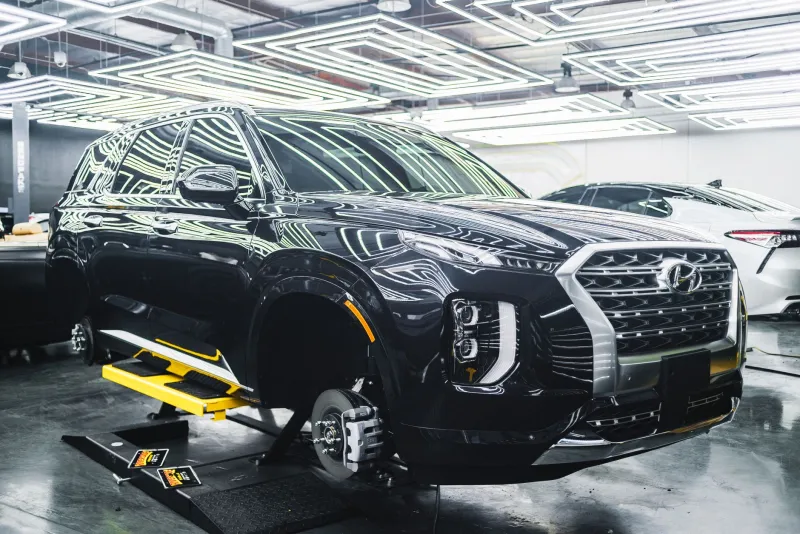
Staying the Course: The Real Financial Rewards Hyundai's Most Loyal Customers Are Quietly Collecting

For most American car buyers, the phrase "loyalty program" conjures images of airline miles and grocery store points—small gestures that rarely move the needle on a major purchase. In the automotive world, however, the calculus is considerably different. When a vehicle transaction can easily reach five figures, even a modest percentage discount translates into real money. And for drivers who have made Hyundai a consistent part of their household, the accumulated advantages are proving to be more substantial than many outsiders—or even insiders—realize.
What Loyalty Actually Looks Like in Practice
Hyundai's loyalty incentives are not always advertised with the same fanfare as seasonal sales events or zero-percent financing promotions. Yet they exist, and for qualifying returning customers, they can be layered on top of existing offers in ways that create meaningful savings at the point of purchase.
The cornerstone of Hyundai's returning-customer strategy is the Loyalty Bonus Cash program, which periodically offers current Hyundai owners an additional cash allowance when purchasing or leasing a new model. Depending on the vehicle and the timing of the transaction, these bonuses have ranged from several hundred to over a thousand dollars in recent model years. When combined with manufacturer incentives already in the market, the total reduction can shift a negotiation significantly in the buyer's favor.
Denver-based Hyundai owner Patricia Nguyen, who purchased her third Hyundai in four years last spring, described the experience succinctly: "I had no idea I qualified for an extra $750 on top of the rebate they were already running. My sales consultant brought it up when she pulled up my purchase history. That kind of thing makes you feel like the relationship actually means something."
Financing Benefits That Compound Over Multiple Transactions
Beyond purchase incentives, loyalty customers often gain access to preferred financing structures through Hyundai Motor Finance. Returning lessees, in particular, frequently benefit from reduced acquisition fees, waived disposition charges at lease end, and in some cases, expedited approval processes that streamline the transition from one vehicle to the next.
A dealership finance manager in the Atlanta metro area, speaking on background, noted that repeat customers represent a disproportionately low risk profile for lenders. "When someone has made 36 or 48 payments on time with us, that history matters. We can sometimes structure a deal for them that a first-time buyer simply wouldn't qualify for at the same rate." While individual results vary based on credit profile and market conditions, the pattern of preferential treatment for established customers appears consistent across multiple regional markets.
Service Perks That Go Beyond the Oil Change
The financial relationship between loyal Hyundai owners and their dealerships extends well into the service lane. Many Hyundai dealerships across the country have implemented informal or formal tiered service programs that reward customers whose vehicles have been consistently maintained at the same location.
These perks can include priority scheduling during peak periods, complimentary multi-point inspections, discounted labor rates on select services, and early access to service campaign communications before they reach the broader public. For owners who treat their Hyundai as a long-term asset rather than a short-cycle commodity, these service benefits reduce both the cost and the friction of vehicle ownership over time.
In Portland, Oregon, Marcus Delgado has owned three Hyundai vehicles and serviced all of them at the same dealership for nearly nine years. "They know my name when I walk in," he said. "Last year when I needed a same-week appointment before a road trip, they fit me in even though the schedule was full. That's not something you get as a stranger."
How Hyundai Stacks Up Against Competitor Loyalty Programs
The competitive landscape for automotive loyalty programs is active. Toyota's loyalty incentives, for instance, are well-publicized and often cited by industry analysts as a benchmark. Ford has its own returning-customer bonus structure, and General Motors periodically runs conquest and loyalty cash promotions across its brands.
What distinguishes Hyundai's approach, according to several observers, is the flexibility with which loyalty bonuses can be combined with other available incentives. Unlike some competitors whose loyalty cash is a standalone offer that cannot be stacked, Hyundai's programs have, in many recent promotional periods, been combinable with manufacturer rebates, regional dealer incentives, and Hyundai Motor Finance offers simultaneously.
This stackability is where the real differentiation emerges. A returning customer who is also financing through Hyundai Motor Finance and purchasing during a promotional window can, in favorable circumstances, access three or four distinct benefit streams at once. The aggregate effect on total transaction cost can be substantial—sometimes exceeding what a competing brand's loyalty program delivers in isolation.
The Intangible Value of Institutional Familiarity
Numbers tell part of the story. But long-term Hyundai owners frequently cite a less quantifiable benefit: the comfort of familiarity within a brand ecosystem they have come to trust.
Hyundai's warranty structure—one of the most comprehensive in the non-luxury segment—means that owners who remain within the brand carry forward an understanding of what is covered, what is not, and how to navigate the service relationship when something goes wrong. That institutional knowledge has genuine value. First-time buyers at any dealership spend considerable time learning the rhythms of a new brand. Returning Hyundai customers arrive already fluent.
Sarah Kwan, a Hyundai owner from the Chicago suburbs who recently upgraded from a Tucson to a Santa Fe, put it plainly: "I knew exactly what to expect from the warranty, I knew how the app worked, and I knew which service advisor I trusted. Starting over with a different brand would have meant learning all of that again. At some point, that learning curve has a price."
Making the Most of What You've Built
For current Hyundai owners who have not yet explored what their loyalty status may entitle them to, the first step is straightforward: contact your dealership directly and ask. Loyalty eligibility is determined by purchase or lease history on file, and a sales or finance team member can quickly identify which current programs apply to your situation.
It is also worth timing any new purchase or lease to coincide with periods when Hyundai's regional or national incentive calendar is most favorable. Loyalty bonuses tend to appear alongside broader promotional events—model-year-end clearance periods, holiday sales events, and new model launches—when manufacturers are most motivated to retain existing customers.
The broader takeaway is this: the relationship between a Hyundai owner and the brand is not reset at the end of each transaction. It accumulates. And for those who have invested years and multiple purchases into that relationship, the returns—financial, logistical, and experiential—are more tangible than many drivers have stopped to calculate.